
2026 - Franco Angeli
ID: 6242963
Articolo PDF (0,23 Mb)
Consultabile solo con Adobe Acrobat Reader - software gratuito - (scopri come aprire i documenti)
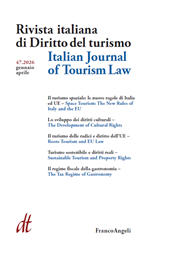
Il regime fiscale della gastronomia, tra turismo, patrimonio culturale e prodotti agroalimentari di eccellenza
27-49 p.
La gastronomia è il motore che negli ultimi anni ha spinto molti turisti a visitare il nostro paese e tale tipologia di turismo culturale è destinata a crescere in modo esponenziale nei prossimi anni, grazie al recente riconoscimento della cucina italiana quale Patrimonio culturale immateriale dell'umanità. La fiscalità, in questa evoluzione, deve farsi trovare pronta. La normativa fiscale, infatti, può svolgere un ruolo fondamentale nello sviluppo della gastronomia e nella valorizzazione di prodotti agroalimentari di eccellenza, condizionando le scelte degli operatori economici ogniqualvolta viene riservato un trattamento fiscale più favorevole a determinati prodotti rispetto ad altri, o a determinate attività, specie se svolte in un contesto rurale o meno. Nel settore gastronomico attuale, però, non esiste un regime fiscale omogeneo, né a livello nazionale, né a livello europeo. Il regime fiscale non è quindi unico e, partendo dal modello"ordinario" dedicato al reddito agrario, prevede numerose eccezioni,
specifiche per ciascun prodotto, creando asimmetrie e disparità. [Testo dell'editore]
Gastronomy is the engine that has attracted many tourists to our country in recent years, and this type of cultural tourism is set to grow exponentially in the coming years, thanks to the recent recognition of Italian cuisine as an Intangible Cultural Heritage of Humanity. The tax system must be ready for this evolution. Tax regulations, indeed, can play a fundamental role in the development of the gastronomy and of excellent agri-food products, conditioning the choices of economic operators whenever better tax treatment is given to certain products than to others; or to certain activities, in particular if they are carried out in a rural context or not. In the actual gastronomy field, there is no homogeneous tax regime, both at the national and European levels. So, the tax regime is not unique and, starting from the"ordinary" model dedicated to agricultural income, it provides for numerous exceptions, specific to each product, creating asymmetries and disparities. [Publisher's text]
-
Articoli dello stesso fascicolo (disponibili singolarmente)
-
Informazioni
Codice DOI: 10.3280/DT2026-047002
ISSN: 2039-9391
MATERIE
Iva esclusa
PDF
Articolo
Articolo
Leggi le condizioni d'uso