2026 - Franco Angeli
ID: 6226899
Articolo PDF (0,68 Mb)
Consultabile solo con Adobe Acrobat Reader - software gratuito - (scopri come aprire i documenti)
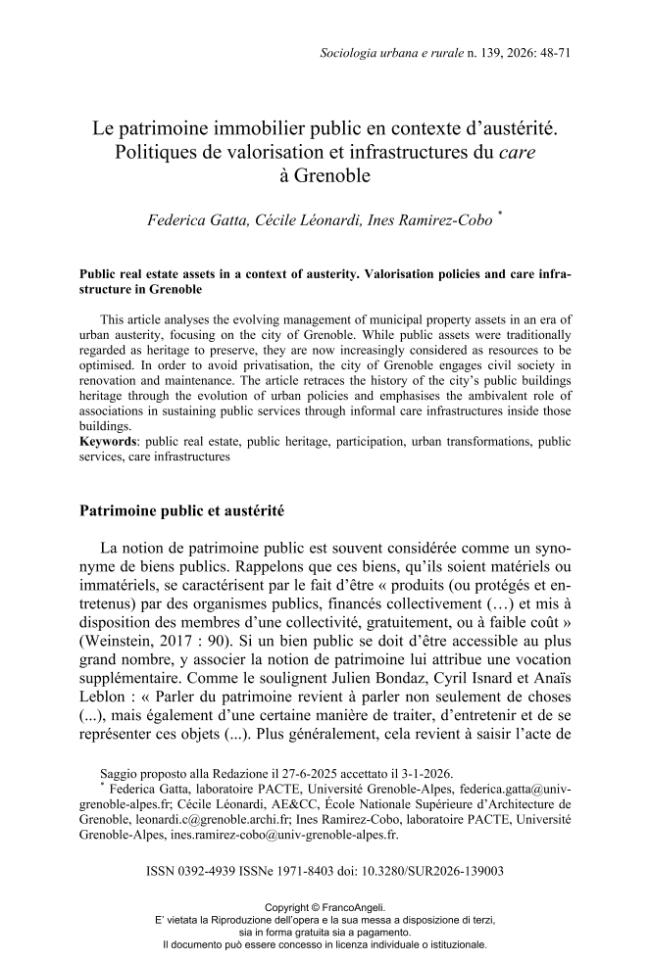
Le patrimoine immobilier public en contexte d'austérité : politiques de valorisation et infrastructures du care à Grenoble
48-71 p.
Cet article analyse l'évolution de la gestion des biens immobiliers municipaux dans des conditions d'austérité urbaine, en particulier à Grenoble. Traditionnellement considérés comme un patrimoine à préserver, les biens publics sont aujourd'hui de plus en plus perçus comme des ressources à optimiser. Évitant la privatisation, la ville engage la société civile dans leur rénovation et entretien. L'article retrace l'histoire du patrimoine immobilier public de la ville à travers l'évolution des politiques urbaines et met en évidence le rôle ambivalent des associations dans le maintien des services publics par le biais d'infrastructures de care informelles à l'intérieur de ces bâtiments. [Résumé par l'éditeur]
This article analyses the evolving management of municipal property assets in an era of urban austerity, focusing on the city of Grenoble. While public assets were traditionally regarded as heritage to preserve, they are now increasingly considered as resources to be optimised. In order to avoid privatisation, the city of Grenoble engages civil society in renovation and maintenance. The article retraces the history of the city's public buildings heritage through the evolution of urban policies and emphasises the ambivalent role of associations in sustaining public services through informal care infrastructures inside those buildings. [Publisher's text]
Fa parte di
Sociologia urbana e rurale : XLVIII, 139, 2026-
Articoli dello stesso fascicolo (disponibili singolarmente)
-
Informazioni
Codice DOI: 10.3280/SUR2026-139003
ISSN: 1971-8403
MATERIE
PAROLE CHIAVE
- public real estate, public heritage, participation, urban transformations, public services, care infrastructures
Iva esclusa
PDF
Articolo
Articolo
Leggi le condizioni d'uso