2025 - Morcelliana
ID: 6170504
Artikel PDF (1,65 Mb)
Nur mit Adobe Acrobat Reader kompatibel - kostenlose Software - (erfahren Sie, wie Sie die Dokumente öffnen)
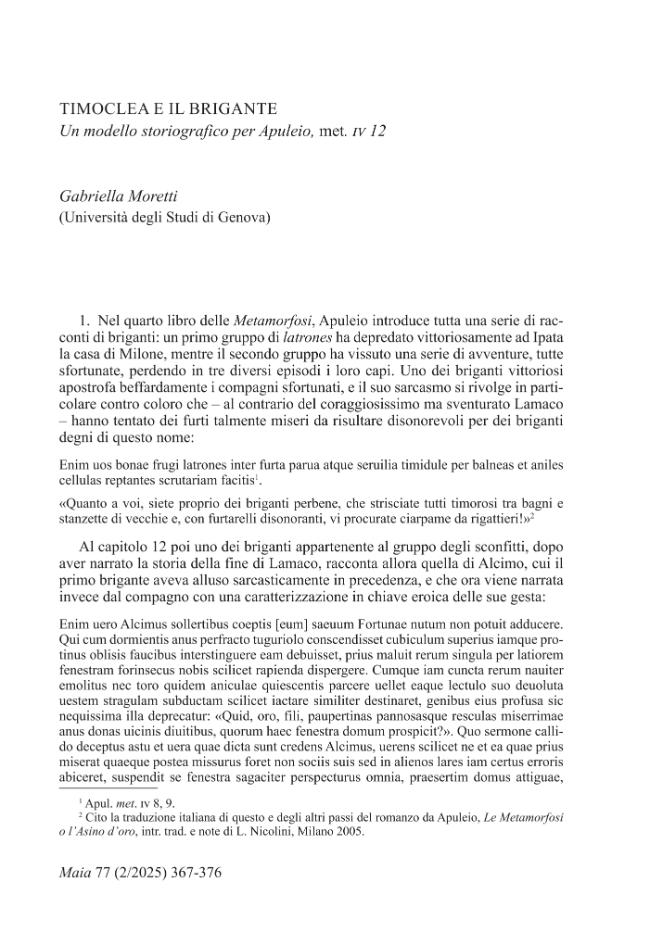
Timoclea e il brigante : un modello storiografico per Apuleio, met. IV 12.
P. 367-376
Nel quarto libro delle Metamorfosi la storia del brigante Alcimo, ucciso con l'inganno - buttandolo giù da una finestra - da una vecchietta che aveva tentato di derubare, presenta inconfondibili elementi di contatto con la celebre storia, narrata soprattutto da Plutarco, della nobildonna tebana Timoclea, che uccise un soldato Trace che l'aveva violentata e derubata scaraventandolo con l'inganno giù in un pozzo. La vicenda di Timoclea presenta inoltre singolari coincidenze con un'importante testimonianza iconografica: una scena figurata, scandita i due fasi e purtroppo incompleta, del fregio del cosiddetto Triclinio Nero della Casa della Farnesina. La presenza dello stratagemma del pozzo fra le numerose scene del fregio, raffiguranti per lo più scene di giudizio, conferma il carattere topico della storia di Timoclea e mostra i due fuochi su cui si basa la sua rappresentazione figurata: l'astuto stratagemma con cui la donna si vendica, e la saggia clemenza del giudizio di Alessandro.
Questi saranno i due assi anche della fortuna iconografica moderna della vicenda [Testo dell'editore].
In the fourth book of the Metamorphoses, the story of the brigand Alcimus, whois killed through deception - thrown out of a window by an old woman he had tried to rob- shows unmistakable parallels with the famous tale, recounted above all by Plutarch, ofthe Theban noblewoman Timoclea, who killed a Thracian soldier that had raped and robbed her by tricking him and throwing him into a well. The story of Timocleia also presents striking parallels with an important iconographic testimony: a figured scene, divided into twophases and unfortunately incomplete, from the frieze of the so-called Black Triclinium of the Farnesina House. The presence of the "well stratagem" among the many scenes of thefrieze - most of which depict acts of judgment - confirms the topic nature of Timocleia'stale and highlights the two focal points on which its visual representation is based: the cunning stratagem by which the woman takes revenge, and the wise clemency of Alexander'sjudgment.
These will remain the two central axes also in the modern iconographic fortune of the episode [Publisher's Text].
33313 characters
-
Artikel aus derselben Ausgabe (einzeln erhältlich)
-
Informationen
ISSN: 2611-805X
THEMENBEREICHE
KEYWORDS
- Timoclea, Vendetta, Plutarco, Apuleio, Novelle di briganti, Iconografia,Alessandro Magno
- Timoclea, Revenge, Plutarch, Apuleius, Robbers' Tales, Iconography, Alexanderthe Great
MwSt ausgenomen
PDF
Artikel
Artikel
Erlaubte Funktionen anzeigen