2024 - Anteferma

ID: 6163483
Article PDF (1,6 Mb)
Pris en charge uniquement par Adobe Acrobat Reader - logiciel gratuit - (découvrez comment ouvrir les documents)
Sotto la buccia della terra = Under the skin of the earth
2024 - Anteferma
P. 22-31
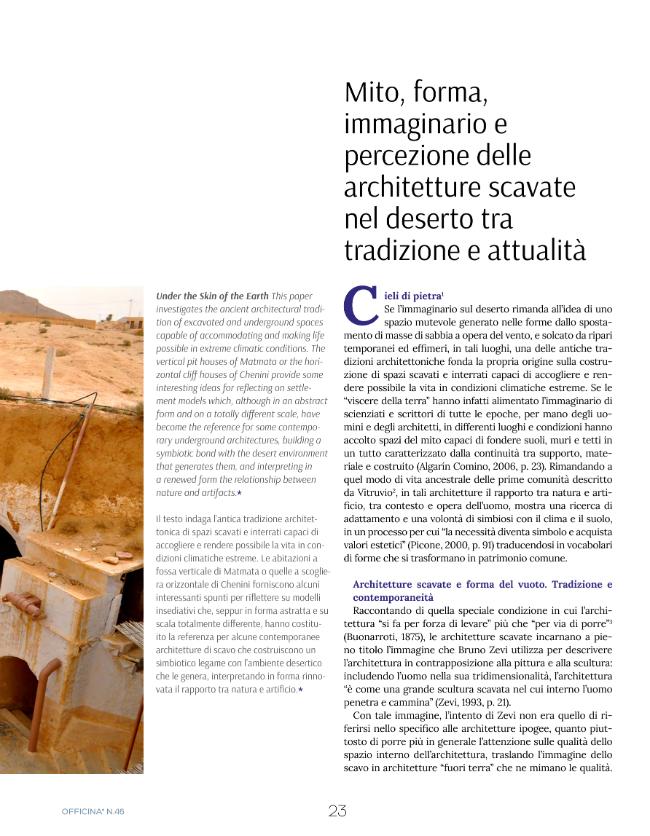
Il testo indaga l'antica tradizione architettonica di spazi scavati e interrati capaci di accogliere e rendere possibile la vita in condizioni climatiche estreme. Le abitazioni a fossa verticale di Matmata o quelle a scogliera orizzontale di Chenini forniscono alcuni interessanti spunti per riflettere su modelli insediativi che, seppur in forma astratta e su scala totalmente differente, hanno costituito la referenza per alcune contemporanee architetture di scavo che costruiscono un simbiotico legame con l'ambiente desertico che le genera, interpretando in forma rinnovata il rapporto tra natura e artificio [Testo dell'editore].
This paper investigates the ancient architectural tradition of excavated and underground spaces capable of accommodating and making life possible in extreme climatic conditions. The vertical pit houses of Matmata or the horizontal cliff houses of Chenini provide some interesting ideas for reflecting on settlement models which, although in an abstract form and on a totally different scale, have become the reference for some contemporary underground architectures, building a symbiotic bond with the desert environment that generates them, and interpreting in a renewed form the relationship between nature and artifacts [Publisher's text].
39617 characters
Fait partie de
OFFICINA* : 46, 2024-
Articles du même numéro (disponibles individuellement)
-
Informations
Code DOI : 10.57623/2384-9029.2024.46.22-31
ISSN: 2384-9029
DISCIPLINES
KEYWORDS
- Spazi scavati, deserto, turismo
- Underground spaces, desert, tourism
PDF
a
Article
Article
Voir les conditions d’utilisation