
2020 - Lexington Books
ID: 6183148
E-book EPUB
Consultabile con Torrossa Reader (scopri come)
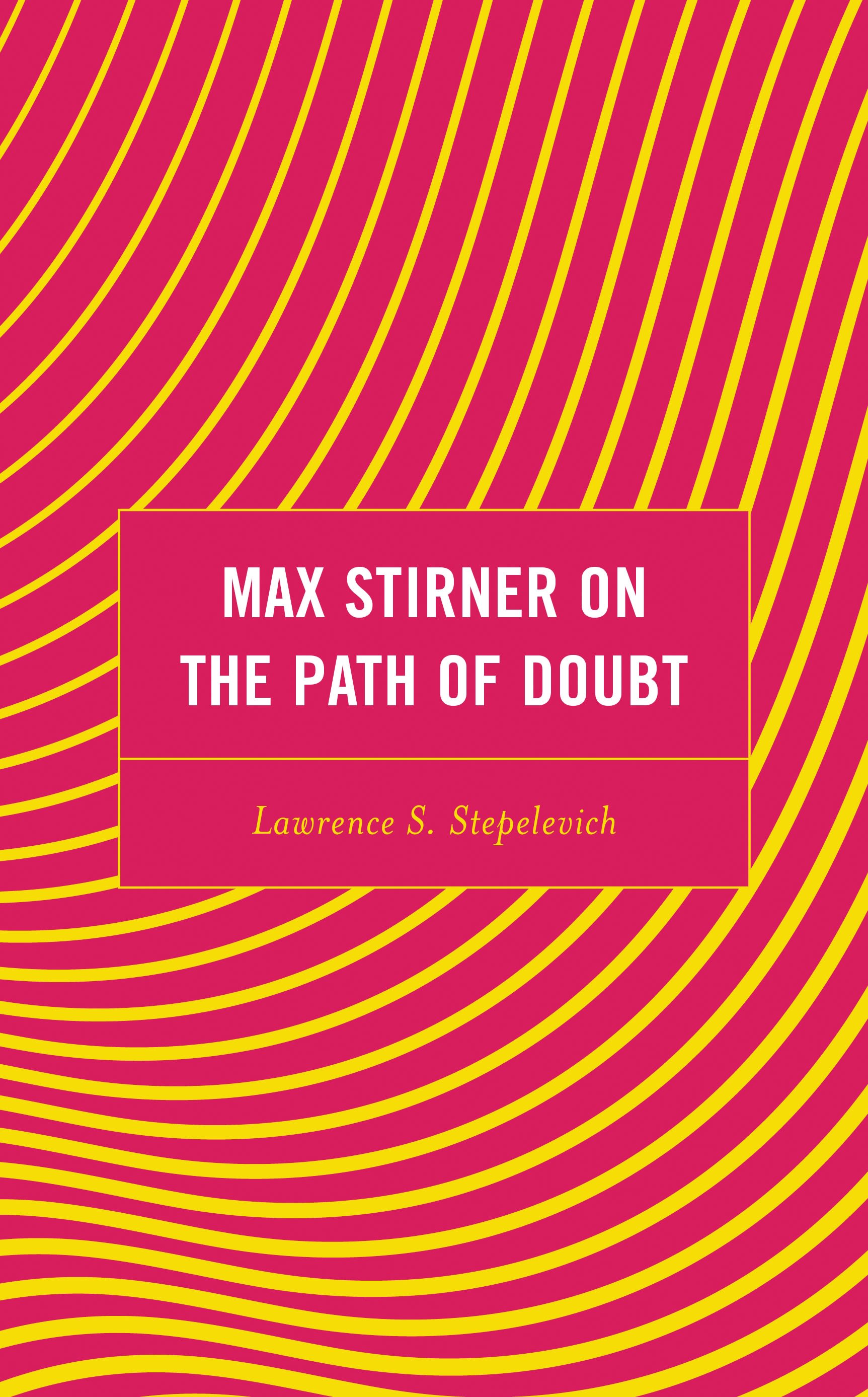
Max Stirner on the Path of Doubt
Max Stirner on the Path of Doubt examines Stirner's incisive criticism of his contemporaries during the period from the death of Hegel, in 1831, to the 1848 German Revolution. Stirner's work, mainly the Ego and His Own, considered each of the major figures within that German school known as "The Young Hegelians.\u0022 Lawrence S. Stepelevich argues that for Stirner, they were but "pious atheists,\u0022 and their common revolutionary ideology concealed an ancient religious ground - which Stirner set about to reveal. The central doctrine of this school, that Mankind was its own Savior, was initiated in 1835 by the theologian, David F. Strauss's in his Life of Jesus , and it progressed with August von Cieszkowski's mystical recasting of history, followed by Bruno Bauer's absolute atheism and Ludwig Feuerbach's statement that "Man is God.\u0022 This soon found reflection in the "Sacred History of Mankind\u0022 declared by Moses Hess. Within a decade, the result was the secular reformulation of this theological
ideology into the "Scientific Socialism\u0022 of Karl Marx and Frederick Engels. Although linked to it, Max Stirner was the most relentless and feared critic of this school. His work, never out of print, but largely ignored by academics, has inspired countless "individualists\u0022 set upon rejecting any form of religious or political "causes,\u0022 and finding Stirner's assertion that he had "set his cause upon nothing\u0022 took this as their own cause. [Publisher's text]
553045 characters.
_xlfn.CONCAT(BL617," characters").
-
Informazioni
ISBN: 9781793636898
Iva esclusa
 EPUB
EPUB E-book
Leggi le condizioni d'uso