

2017 - Hart Publishing
ID: 6037461
E-book EPUB
Consultabile solo con Torrossa Reader (scopri come)
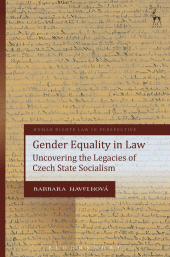
Gender Equality in Law : Uncovering the Legacies of Czech State Socialism
"Since the fall of the Berlin wall there has been a surprising dearth of high quality of scholarship on legal culture in the communist successor states of East Central Europe. In this excellent book Barbara Havelkova engages with the reversal of many of the advances the socialist period made in gender relations, examining the historical roots of the current failure of Czech law to engage with the discriminatory practices that have negatively affected the lives of women. She does this by a forensic excavation of law, discourses and practices of the socialist era revealing the patriarchal assumptions underpinning them that became deeply embedded in Czech legal culture, and that have been carried forward to the present day. The book is a compelling read. It provides answers to many of the questions that have perplexed feminists about the post-soviet transition and at the same time speaks more generally to the debates surrounding the troubling rightward shift in the politics of the communist successor states of
as the legitimacy of gender equality laws is increasingly precarious."Professor Judy Fudge, Kent Law School Gender equality law in Czechia, as in other parts of post-socialist Central and Eastern Europe, is facing serious challenges. When obliged to adopt, interpret and apply anti-discrimination law as a condition of membership of the EU, Czech legislators and judges have repeatedly expressed hostility and demonstrated a fundamental lack of understanding of key ideas underpinning it. This important new study explores this scepticism to gender equality law, examining it with reference to legal and socio-legal developments that started in the state-socialist past and that remain relevant today. The book examines legal developments in gender-relevant areas, most importantly in equality and anti-discrimination law. But it goes further, shedding light on the underlying understandings of key concepts such as women, gender, equality, discrimination and rights. In so doing, it shows the fundamental intellectual and
conceptual difficulties faced by gender equality law in Czechia. These include an essentialist understanding of differences between men and women, a notion that equality and anti-discrimination law is incompatible with freedom, and a perception that existing laws are objective and neutral, while any new gender-progressive regulation of social relations is an unacceptable interference with the 'natural social order'. Timely and provocative, this book will be required reading for all scholars of equality and gender and the law. [Publisher's Text]
1014229 characters.
-
Informazioni
ISBN: 9781509905850
COLLANA
Iva esclusa
 EPUB
EPUB Leggi le condizioni d'uso