
2021 - John Wiley et Sons Ltd.
ID: 6228485
E-book EPUB
Pris en charge par Torrossa Reader (voir détails)
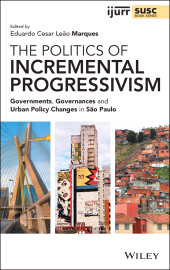
The Politics of Incremental Progressivism : Governments, Governances and Urban Policy Changes in São Paulo
THE POLITICS OFINCREMENTAL PROGRESSIVISMâÂUngovernable neoliberal post politics assemblage metropolis from the South? No. This book shows innovative redistributive policies, regulation, and social participation recently in São Paulo, although gradually, slowly, and contentiously, and despite failures and inequalities. This great one-city-many-policies comparison departs from high quality empirically grounded research to show that collective action and public policies are back in town. In São Paulo, they have made a difference.' Patrick Le Galès, Sciences Po CNRS research Professor, Dean Sciences Po Urban School, France âÂFor anyone interested in urban governance, The Politics of Incremental Progressivism is a must-read. Nowhere in the world have cities faced greater challenges yet been more innovative in tackling the problems of urban poverty and exclusion than in Brazil. One could not ask for a more incisive, detailed and groundbreaking set of studies on urban transformation and the politics of change.'
Patrick Heller, Lyn Cross Professor of Social Sciences, Brown University, USA Large metropolises of the Global South are usually portrayed as ungovernable. The Politics of Incremental Progressivism analyzes urban policies in São Paulo one of the biggest and most complex Southern cities not only challenging those views, but showing the recent occurrence of progressive change. This book develops the first detailed and systematic account of the policies and politics that construct, maintain and operate a large Southern metropolis. The chapters cover the policies of bus and subway transportation, traffic control, waste collection, development licensing, public housing and large urban projects, additionally to budgeting, electoral results and government formation and dynamics.This important book contributes to the understanding of how the city is governed, what kinds of policies its governments construct and deliver and, more importantly, under what conditions it produces redistributive change in the direction of
policies that reduce its striking social and urban inequalities. [Publisher's Text]
739921 characters.
-
Informations
ISBN: 9781119647812
DISCIPLINES
TVA exclue
 EPUB
EPUB E-book
Voir les conditions d’utilisation