2025 - Casemate Group
ID: 6190380
E-book PDF (24,26 Mb)
Pris en charge uniquement par Adobe Acrobat Reader - logiciel gratuit - (découvrez comment ouvrir les documents)
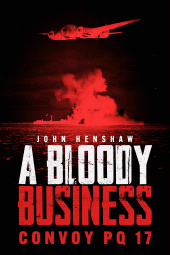
A Bloody Business : Convoy PQ 17
256 p.
Examines the disastrous Allied Convoy PQ 17 of 1942, exploring how strategic errors and one critical decision led to its near-destruction.In early June 1941, few optimists would have forecast that beleaguered Britain would see victory or even be joined by new military allies. Yet on June 22, Nazi Germany launched Operation;Barbarossa, its surprise attack on the Soviet Union, which in six months reached the very gates of Moscow. Then, on December 7, Japan launched an even more astonishing surprise attack on the US NavyPacific Fleet, off-watch in its home base of Pearl Harbor, Hawaii. Without these two surprise attacksand possibly without either one of themthe end result of World War II would have been vastly different.BritainPrime Minister, Winston Churchill, was quick to realise an uncomfortable truththe enemy of my enemy is my friendand keeping the Soviet Union in the war, albeit at the expense of sending vital war materiel to a totalitarian regime was anathema, took pressure off Britain and her allies
Accordingly, the first of 78 convoys to the Russian Kola Peninsula left in August 1941, almost two months to the day after Operation;Barbarossa began. The following year saw momentous events that gave impetus to the basic direction in which World War II now headed: in the Alliesfavor. However, these successes were marred by many reversals of fortuneon land, in the air and at sea. One of the Allied reversals of 1942 involved the almost complete destruction of a convoy supplying vital war matè riel from Britain and the United States to Soviet Russia: PQ 17.What made this sad event worse was that it didn need to have happened. But for the decision of one man, Chief of the Naval Staff and First Sea Lord of the Admiralty Sir Dudley Pound, the massacre could have been avoided. Pound contradicted his staff advice and issued the fateful order, Convoy is to scatter on the mistaken belief that the German battleship;Tirpitz and attending warships had put to sea to intercept PQ 17. [Publisher's Text]
-
Informations
ISBN: 9781636246086
DISCIPLINES
TVA exclue
PDF
E-book
E-book
Voir les conditions d’utilisation