
2026 - Bibliopolis
ID: 6307760
Artículo PDF (0,11 Mb)
Compatible solo con Adobe Acrobat Reader - software gratuito - (descubra cómo abrir los archivos)
Ernst Cassirer as a Quiet yet Radical Thinker : on the Fundamental Conceptual Shifts in the Philosophy of the Symbolic Forms
P. 251-267
Today, reading Ernst Cassirer may seem to require explanation. Histraditional terminology in particular makes him all too easily appear as alate idealist classic who knows how to explain culture but does not knowhow to rethink it. In contrast, materialist cultural theories are gaining popularityby taking an iconoclastic counter-position to the philosophical-humanistictradition. By doing so, however, they often tend to emphasize– unwillingly – the very concepts they are trying to overcome, because theydefine themselves too strongly by what they do not want to be. Aud SisselHoel's reading of Cassirer presents him as a thinker who does not fall intothe trap of simple overturning. She highlights his thinking as one of continuousreception that does not seek to break with earlier lines of thought,but is nevertheless eminently innovative.
By contrasting Cassirer's quietershifting of the conceptual framework with Derrida's attempt to deconstructconceptual thinking as such, she is able to show us a radical Cassirerwe tend to overlook. In this article, I want to follow Hoel's insights andask what Cassirer's philosophy, accentuated in this way, can contribute to acontemporary philosophy of culture. I will propose that Cassirer's symbolicidealism preserves the possibility of discovering the possible within thefactual, which is the prerequisite for formulating a non-fatalist critique ofculture—one that holds up ideal possibilities as a mirror to reality.[Publisher's text]
49337 characters
Forma parte de
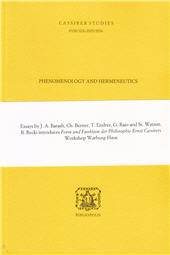
Cassirer studies : XVIII/XIX, 2025/2026-
Artículos del mismo número (disponibles individualmente)
-
Información
Código DOI: 10.1400/304831
ISSN: 2038-6575
IVA excluido
PDF
Artículo
Artículo
Consulta las condiciones de uso