2012 - Princeton University Press
ID: 6220580
E-book PDF (1.36 Mb)
Compatible only with Adobe Acrobat Reader - free software - (find out how to open the files)
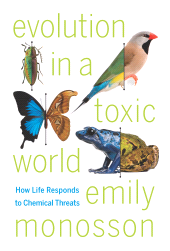
Evolution in a Toxic World : How Life Responds to Chemical Threats
264 p.
With BPA in baby bottles, mercury in fish, and lead in computer monitors, the world has become a toxic place. But as Emily Monosson demonstrates in her groundbreaking new book, it has always been toxic. When oxygen first developed in Earths atmosphere, it threatened the very existence of life: now we literally cant live without it. According to Monosson, examining how life adapted to such early threats can teach us a great deal about todays (and tomorrows) most dangerous contaminants. While the study of evolution has advanced many other sciences, from conservation biology to medicine, the field of toxicology has yet to embrace this critical approach.In Evolution in a Toxic World, Monosson seeks to change that. She traces the development of lifes defense systemsthe mechanisms that transform, excrete, and stow away potentially harmful chemicalsfrommore thanthree billion years ago to today. Beginning with our earliest ancestors response to ultraviolet radiation, Monosson explores the evolution of chemical
defenses such as antioxidants, metal binding proteins, detoxification, and cell death. As we alter the worlds chemistry, these defenses often become overwhelmed faster than our bodies can adapt. But studying how our complex internal defense network currently operates, and how it came to be that way, may allow us to predict how it will react to novel and existing chemicals. This understanding could lead to not onlybetter management and preventative measures, but possibly treatment of current diseases. Development of that knowledge starts with this pioneering book. [Publisher's text]
-
Information
ISBN: 9781610912211
DISCIPLINES
VAT Excluded
PDF
E-book
E-book
View the Terms of Use