
2026 - Brepols
ID: 6254873
E-book PDF (16,2 Mb)
Compatible solo con Adobe Acrobat Reader - software gratuito - (descubra cómo abrir los archivos)
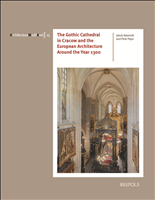
The Gothic Cathedral in Cracow and the European Architecture Around the Year 1300
430 p.
The turn of the fourteenth century was a difficult period in the history of late medieval Europe, marked by political instability, endless wars and all kinds of disasters. Yet it saw an extraordinary flourishing of Gothic architecture, marked by constant stylistic transformations that gave rise to a new phenomenon in European architecture: the late Gothic.This book is devoted to the Gothic cathedral in Cracow (1320–1364), an edifice that perfectly embodies these complex transformations. Although situated on the periphery of the Latin world at the time, it is one of the most stylistically advanced buildings that can be counted as examples of "architecture around 1300", featuring most of the artistic phenomena that distinguish this period in the history of medieval art. Moreover, this church served as the place of coronation and necropolis for the kingsof Poland, andas anational shrine of the patron saint of the Kingdom, Saint Stanislaus, placing it on a par with sacred placessuch asReims, Saint-Denis,
Westminster, Aachen or Prague.This new studypresents Cracow Cathedral in the broader context of the stylistic transformationsthat marked theGothic architectural periodbetween 1270 and 1350, and approaches this interregional phenomenonfrom a completely new angle, taking into account many buildings in Poland and Central Europe,that are generallyoverlooked. In addition to the history of style, the book focuses on the interface of politics, functional and liturgical considerations, and requirements of ceremony and display as determinants of the form and function of an architectural work. [Publisher's text]
1288363 characters.
-
Información
ISBN: 9782503616599
COLECCIÓN
MATERIAS
IVA excluido
PDF
E-book
E-book
Consulta las condiciones de uso