2026 - Princeton University Press
ID: 6221669
E-book PDF (3,77 Mb)
Compatible solo con Adobe Acrobat Reader - software gratuito - (descubra cómo abrir los archivos)
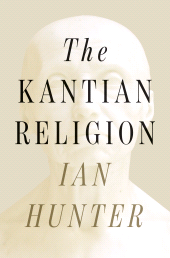
The Kantian Religion
504 p.
A historical inquiry into Kantian philosophy as a form of philosophical religionKantian philosophy is typically viewed as providing a universal theory of knowledge and morality based on timeless principles retrieved from the human mind. In The Kantian Religion, Ian Hunter offers a starkly different account. Hunter contends that Kants arguments were assembled from purely historical sources and served as ascetic devices for crafting the towering self of the Kantian philosopher; they were exercises in intellectual self-clarification and moral transformation undertaken by a cohort of the philosophically educated in search of spiritual clarity and moral purity. These solemn rites of the mind were seen as heir and rival to the regenerative resources and cultural importance of the Christian religion, and Kantianism was characterized as a philosophical religion.Hunter describes the ways that elite spiritual athletes performed a series of philosophically strenuous acts of the self on the self through Kants
intellectual exercises. When Kantianism emerged as an insurgent cultural movement in the 1780s, it offered young academics training to be clergy and teachers a philosophy that was powerful enough to supplant Christian spirituality and to subordinate humanist scholarship and the natural sciences to philosophical self-reflection. For Kant and his followers, the religious disposition of Kantian philosophy came solely from the immanent practice of the philosophy itself. As a rival to conventional religion and as an academic interloper, Kantian philosophy unleashed a wave of conflicts in Germanys ecclesiastical and scholarly cultures. Although recent Kant commentary typically views Kantianism as intrinsically secular and scientific, Hunter argues provocatively that Kants contemporaries viewed his philosophy as an extra-ecclesiastical path to spiritual refinement and moral regeneration. [Publisher's text]
-
Información
ISBN: 9780691280639
MATERIAS
IVA excluido
PDF
E-book
E-book
Consulta las condiciones de uso