
2019 - Intellect
ID: 6334035
E-book PDF (45.26 Mb)
Compatible only with Adobe Acrobat Reader - free software - (find out how to open the files)
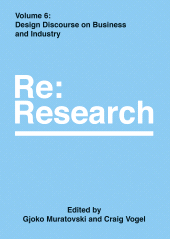
Design Discourse on Business and Industry : Re:Research, Volume 6
100 p.
Just as the term design has been going through change, growth and expansion of meaning, and interpretation in practice and education - the same can be said for design research. The traditional boundaries of design are dissolving and connections are being established with other fields at an exponential rate. Based on the proceedings from the IASDR 2017 Conference, Re:Research is an edited collection that showcases a curated selection of 83 papers - just over half of the works presented at the conference. With topics ranging from the introduction of design in the primary education sector to designing information for Artificial Intelligence systems, this book collection demonstrates the diverse perspectives of design and design research. Divided into seven thematic volumes, this collection maps out where the field of design research is now.Interaction Between Client and Design Consultant: The Stance of Client to Design Consultant and Its Influence on Design ProcesslHaebin Lee, Muhammad Tufail, Myungjin Kim,
KwanMyung KimlDesign is essential in product development but several small- and medium-sized enterprises (SMEs) relatively capable of manufacturing are suffered from lack of in-house design ability. For new product design, these SMEs typically employ external designers. In this client-designer interaction, designers propose design solution alternatives to their clients, which clients may accept or reject. In some cases, clients provide designers further design requirements. A study on how interactions are performed and what effects these interactions have on the results of product development is essential to determine what is needed to achieve successful collaborative relationships. Thus, this study analyzed three design development cases that were previously performed to understand how interactions work between clients and designers and its effect on the outcomes. In all cases, the design team developed designs for the clients based on their technological requirements. This study focused on the effect of
studies or evaluations. In this study, we investigated the perceptions of six design thinking methods of 21 managers in the agriculture industry as they explored employee and business-related problems and solutions using these tools in a 6-hour workshop. The results from pre and post-survey responses suggest that the managers agreed on the value design thinking could bring to their own domains and were able to articulate on how they can use them in solving problems. We conclude by proposing directions for research to further explore adaptation of design thinking for the management practice context.Product Design Briefs as Knowledge-Based Artifacts of Cross-Functional Collaboration in New Product DevelopmentlIan ParkmanlContemporary research in business strategy, new product development and design management has suggested that cross-functional collaboration within team-based environments is critical to successful product development processes. However, scholars have also demonstrated that the mere presence of
inter-functional structures does not necessarily lead to better outcomes. Indeed, the very differences which cause cross-disciplinary teams to result in improved design processes may also lead to friction as team members' backgrounds, orientations and training often cause them to have different perspectives on what information is important to the product design process and to solve development-related problems. Improved understanding how to integrate information from differing functional areas is a clear emphasis of research, yet very few empirical studies have precisely defined the units of knowledge flowing through NPD projects, differences in importance of information elements by functional area or the structures which may facilitate the sharing of information within NPD. This study presents an investigation of product design briefs as knowledge-based artifacts of cross-functional collaboration within NPD. Drawing on a proprietary sample of 68 briefs analyzed through an expert rating procedure alongside
survey questionnaire of 153 product development managers our results define 51 information elements commonly shared between functional areas during an NPD project. We organize these information elements as eight factors, categorize the "importance" of each element to NPD success and describe differences in evaluation from across three primary functional domains of NPD: (a) Design, (b) Marketing and (c) Engineering/ R&D/ Development.Entrepreneurial Universities Meet Their Private Partners: Toward a Better Embedding of the Outcomes of Cross-Sector CollaborationslBaldini Luca, Calabretta Giulia, De Lille ChristinelIn the past decades, universities' involvement in socio-economic development, which goes along with their teaching and researching activities, has defined a new role for them in society's ecosystem. This new role is often referred with the term of "entrepreneurial" university, whose objectives are positive societal, economic and environmental impacts. In order to fulfill such objectives,
entrepreneurial universities might engage in cross-sector collaborations with external organizations. Despite the great contributions that cross-sector collaboration can give to the partners involved, the outcome is mostly unfocused and rarely embedded. This paper explores the outcome embedding in the cross-sector collaboration between entrepreneurial universities and the private sector. To this end, we provide the case of the collaboration between a Dutch airline company and four Dutch entrepreneurial research and teaching institutions. We aim to uncover hindering and enabling factors to the outcome embedding in order to design an interaction platform, design it together. This platform will be a tool to encourage the outcome embedding, moving from being inspired by to the actual implementation of the cross-sector collaboration. In order to fulfill this goal, this study employs a research through design methodology. This approach is a generative process, where cyclic loops of iterations and evaluations with
stakeholders tend to the research goal. The solution is a digital platform, co-created with all stakeholders. This study can inspire practitioners and future research on the problem of unsuccessful cross-sector collaborations, between entrepreneurial universities and external organizations, with more emphasis on the value of embedding and translating the outcomes.Expert Opinion on the Barriers to Communicating Excellent Research in Commercially Driven Design ProjectslDana Al Batlouni, Katie Beverley, Andrew WalterslEffective university-industry collaboration has become a major focus for governments in recent years. Universities are increasingly expected to play a greater role in the innovation system and evidence their contribution to economic development. At the same time, the growth in research quality assessment exercises makes it imperative that the excellence of research conducted in commercially driven activities can be appropriately evaluated. This paper explores the challenge of reconciling
commercially focused activity and research quality assessment in design. Semistructured interviews were conducted with 13 experts including representatives from the design discipline, other applied academic disciplines, research quality assessment leaders and commercial designers. The interviews identified a number of barriers to demonstrating research excellence in commercially driven projects. These were classified as barriers resulting from: the nature of industry/academic relationships; the nature of the project; and the nature of the research quality assessment. It is concluded that there is a need to build a simple, easily usable framework for assessing the research potential of commercially driven design projects from the outset to ensure that the appropriate processes are put in place to communicate research conducted within them.Exploring Design-Specific Factors for Building Longer Term Industry RelationshipslMedeirasari Putri, Mersha Aftab, Mark Bailey, Nicholas Spencerlstrong>strong>When
of collaboration between design and industry, namely, involvement, collaboration and partnerships, contrary to Cahill's theoretical model, which claimed four stages to long-lasting partnerships. Also, the case studies confirm three stages of trust and credibility as factors that help in strengthening a relationship between design and industry. Finally, several intrinsic factors that are unique to design have been identified, which are seen to have helped design in building high levels of trust and credibility.Collaborating Design RisklLaura Ferrarello, Ashley Hall, Mike Kann, Chang Hee LeelThe "Safety Grand Challenge" is a collaborative research project between the Royal College of Art (RCA) School of Design, and the Lloyd's Register Foundation (LRF). The maritime industry is dominated by "grandfathering" leading to a slow-pace of adopting innovations that can reduce risk and save lives at sea. We describe how impact was achieved through collaboration and design innovations that bridged the risk gap between
technologies and human behaviors. Starting from the project brief we designed a collaborative platform that supported a constructive dialog between academia and partner organizations that aimed to foster innovative design approaches to risk and safety. The project generated an engaged community with diverse expertise that influenced the outcomes which included seven prototypes designed by a group of 30 students from across the RCA. Throughout the course of the project the network extended to other partners beyond the initial ones that included the RCA, LRF and Royal National Lifeboat Institution. The "Safety Grand Challenge" demonstrates how research can be an explorative platform that offers opportunities to analyze and design solutions to real-life safety problems in mature industries through the prototypes that reflect the sophistication of the project's collaborations. Our conclusions support how design research helped identify the value of design for safety in tackling complex issues that intertwine
human, environmental and commercial views and can shape new forms of collaborative research between academia and industrial partners.Understanding Passengers' Experiences of Train Journeys to Inform the Design of Technological InnovationslLuis Oliveira, Callum Bradley, Stewart Birrell, Rebecca Cain, Andy Davies, Neil TinworthlIn this paper, we present results from a collaborative research between academic institutions and industry partners in the UK, which aimed to understand the experience of rail passengers and to identify how the design of technology can improve this experience. Travelling by train can often provide passengers with negative experiences. New technologies give the opportunity to design new interactions that support the creation of positive experiences, but the design should be based on solid understanding of user and their needs. We conducted in-depth, face-to-face semi-structured interviews and used additional questionnaires given to passengers on board of trains to collect the data
presented on this paper. A customer journey map was produced to illustrate the passengers' experiences at diverse touchpoints with the rail system. The positive and negative aspects of each touchpoint are plotted over the course of a "typical" journey, followed by the explanations for these ratings. Results indicate how the design of technological innovations can enhance the passenger experience, especially at the problematic touchpoints, e.g. when collecting tickets, navigating to the platform, boarding the train and finding a seat. We finalize this paper pointing toward requirements for future technological innovations to improve the passenger experience.strong>strong>Taxonomy of Interactions and the Design of the Airport Passenger Screening ProcesslLevi Swann, Vesna Popovic, William Mason, Benjamin MacMahonlThis paper presents a case study analyzing the interactions of nine security officers during the mandatory passenger screening process at an Australian international Airport. Eye-tracking glasses
were used to observe the visual, physical and verbal interactions of security officers while they performed the x-ray task. Stationary video recording devices were used to record physical and verbal interactions performed by security officers during the load, search and metal detector tasks. Six taxonomic groups were developed that define the different types of interactions performed by security officers during each task. Each taxonomic group is comprised of several discrete interactions specific to each of the tasks observed. Through analyzing the composition of interactions and the relationships between interactions in different tasks, this paper highlights the prominence of interactions that secu
443057 characters.
-
Information
ISBN: 9781789381498
SERIES
VAT Excluded
PDF
E-book
E-book
View the Terms of Use