2025 - Pen and Sword
ID: 6190273
E-book PDF (2.97 Mb)
Compatible only with Adobe Acrobat Reader - free software - (find out how to open the files)
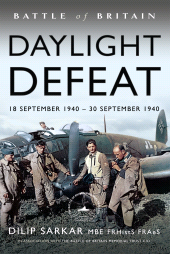
Battle of Britain Daylight Defeat : 18 September 1940 - 30 September 1940
304 p.
a token resistance over London from the last handful of RAF fighters their morale shattered when their first attack was met by over 300, the second by nearly as many. This convinced Hitler that the Luftwaffe could not achieve the aerial superiority needed for the invasion of Britain to proceed. Two days later Operation Seelwe was postponed indefinitely .Reichsmarschall Herman Gring, however, still believed that the Luftwaffe could prevail and so continued attacking the UK, changing tack, yet again. As London had proved it could take it , the Luftwaffe, whilst continuing to bomb the capital by night, now focussed its daylight attacks on the British aircraft industry. Naturally the Supermarine Spitfire factory at Southampton was a primary target; it was subsequently badly hit, with great loss of life. Other factories, in the West Country, were also targeted, and, owing to a navigation error due to cloud cover, the picturesque town of Sherborne was devasted on 30 September 1940.By that date, however, it was
clear that GringHe 111 force was unable to continue absorbing such losses and the type was exclusively switched to night-bombing thereby substantially reducing the German daylight bombing force. On 20 September 1940, Me 109 fighter-bombers attacked London, and going forward the next and final phase would see such attacks, and high-flying fighter sweeps, dominate the daytime arena.Such raids, though, were never going to defeat Britain, so it is fair to say that the period reviewed in this volume really did see the Daylight defeatof the Luftwaffe over England in 1940 and the events involved are interpreted and recounted in great detail. [Publisher's Text]
-
Information
VAT Excluded
PDF
E-book
E-book
View the Terms of Use