
2010 - Brookings Institution Press
ID: 6348841
eBook PDF (7,9 Mb)
Nur mit Adobe Acrobat Reader kompatibel - kostenlose Software - (erfahren Sie, wie Sie die Dokumente öffnen)
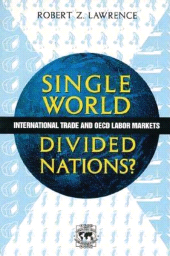
Single World, Divided Nations? : International Trade and the OECD Labor Markets
160 p.
examines the role of trade in developed and developing countries and its impact on labor markets and wage inequality, and discusses what he considers the more important effects of technological and organizational change. He begins by focusing on U.S. wage behavior, then moves to wage behavior in the OECD countries.Lawrence concludes that the impact of globalization on OECD labor markets has been far less damaging than many have argued and, indeed, that international trade enhances national welfare. He presents considerable evidence that the sources of poor labor market performance are essentially domesticÂ-they reflect ongoing technological and organizational shocks that would be present even if the economy was closed. This evidence suggests that international differences in wage rates and labor standards are not major factors in OECD labor market behavior. He explains that the major challenges to policy are educating the public on the nature of these changes, emphasizing the need for worker training and
education to take advantage of new technologies and new organizational structures, and developing measures to reduce earnings inequality while preserving and increasing wage flexibility.Robert Z. Lawrence is professor of international trade and investment at the John F. Kennedy School of Government at Harvard University. His previous books include A Vision for the World Economy: Openness, Diversity, and Cohesion (Brookings, 1996), the capstone volume to the Integrating National Economies series.Copublished with the OECD Development Centre [Publisher's text]
286821 characters.
-
Informationen
ISBN: 9780815746911
THEMENBEREICHE
MwSt ausgenomen
PDF
eBook
eBook
Erlaubte Funktionen anzeigen