
2020 - Intellect
ID: 6337152
eBook PDF (8,07 Mb)
Nur mit Adobe Acrobat Reader kompatibel - kostenlose Software - (erfahren Sie, wie Sie die Dokumente öffnen)
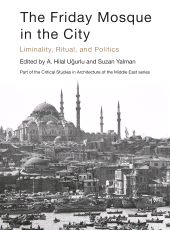
The Friday Mosque in the City : Liminality, Ritual, and Politics
100 p.
Concerned with the relationship between Friday mosque and city in the Islamic context. Focusing particularly on the Friday mosque, the book aims at exploring the concept of liminal(ity) in spatial terms and discuss it in terms of the relationship between the Friday mosque and its surrounding urban context. Transition spaces/zones between the mosque and the urban context are discussed through the case studies from various contexts. In doing so, the manuscript reveals different forms of liminality in spatial sense.Considers widely-studied topics such as the 'Friday mosque' or the 'Islamic city' through a fresh new lens, critically examining each case study in its own spatial urban and socio-cultural context. While these two well-known themes - concepts that once defined the field - have been widely studied by historians of Islamic architecture and urbanism, this collection specifically addresses the functional and spatial ambiguity or liminality between these spaces. Thus, instead of addressing the Friday
mosque as the central signifier of the 'Islamic city', the articles in this volume provide evidence that there was (and continues to be) a tremendous variety in the way architectural borders became fluid in and around Friday mosques across the Islamic geography, from Cordoba to Jerusalem and from London to Lahore.By historicizing different cases and contributing to our knowledge of the way human agency through ritual and politics shaped the physical and social fabric of the city, the papers collectively challenge the generalizing and reductionist tendencies in earlier scholarship. The disciplinary approaches are varied, and include archaeology, art history, history, epigraphy and architecture.The original approach in the book, addressing of the topic of liminality from different points of view and in different periods, creates a fresh approach that invites students and scholars to think deeply about the imbrication of congregational mosques in the daily life of the cities that host them. Moreover, in
element of comparison.Primary market will include scholars, academics and students working on or studying Islamic studies, particularly Islamic history, Islamic architecture and Islamic archaeology.Also of relevance to architectural historians, architects, art historians, city planners, city historians, urban designers, architectural critics, historians, sociologists, archeologists, and those interested in religious studies, and in archaeology of religion. [Publisher's text]
664146 characters.
-
Informationen
ISBN: 9781789383034
THEMENBEREICHE
MwSt ausgenomen
PDF
eBook
eBook
Erlaubte Funktionen anzeigen