
2025 - Wiley-VCH
ID: 6294501
eBook EPUB
Mit dem Torrossa Reader lesbar (lesen Sie mehr)
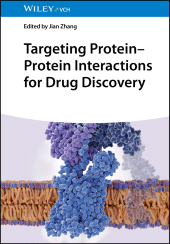
Targeting Protein-Protein Interactions for Drug Discovery
stabilization and therapeutic potential across a range of diseases, small molecule inhibitors targeting BCL-family proteins, revealing their potential in cancer therapy, molecular glues as activators for PPIs, categorized into degraders, stabilizers, and inhibitors based on their biological effects, and the targeting of the APC–Asef interaction for drug discovery in colorectal cancer therapy, offering a case study of specificity and clinical relevance. Targeting Protein–Protein Interactions for Drug Discovery explores sample topics including: Challenges and strategies of drug discovery targeting PPIs, including high-throughput screening and structure-based drug design Fluorescence resonance energy transfer (FRET) technology, a powerful tool for real-time analysis of molecular interactions in live cells Utility of mass spectrometry (MS) for large-scale mapping of PPI networks with high sensitivity and resolution Proximity ligation assays (PLA) for detecting PPIs in situ, emphasizing spatial precision and
adaptability for multiplexed detection Application of surface plasmon resonance (SPR) for characterizing PPI specificity, affinity, and kinetics Exploring both classical and novel approaches to PPI characterization and modulation, Targeting Protein–Protein Interactions for Drug Discovery offers a comprehensive reference for researchers aiming to unlock the therapeutic potential of PPIs along with educators and students engaged in the study of cellular mechanisms, drug discovery, and biotechnology. [Publisher's Text]
37848 characters.
-
Informationen
ISBN: 9783527845811
THEMENBEREICHE
MwSt ausgenomen
 EPUB
EPUB eBook
Erlaubte Funktionen anzeigen