
2021 - John Wiley et Sons Ltd.
ID: 6259813
eBook PDF (20,68 Mb)
Nur mit Adobe Acrobat Reader kompatibel - kostenlose Software - (erfahren Sie, wie Sie die Dokumente öffnen)
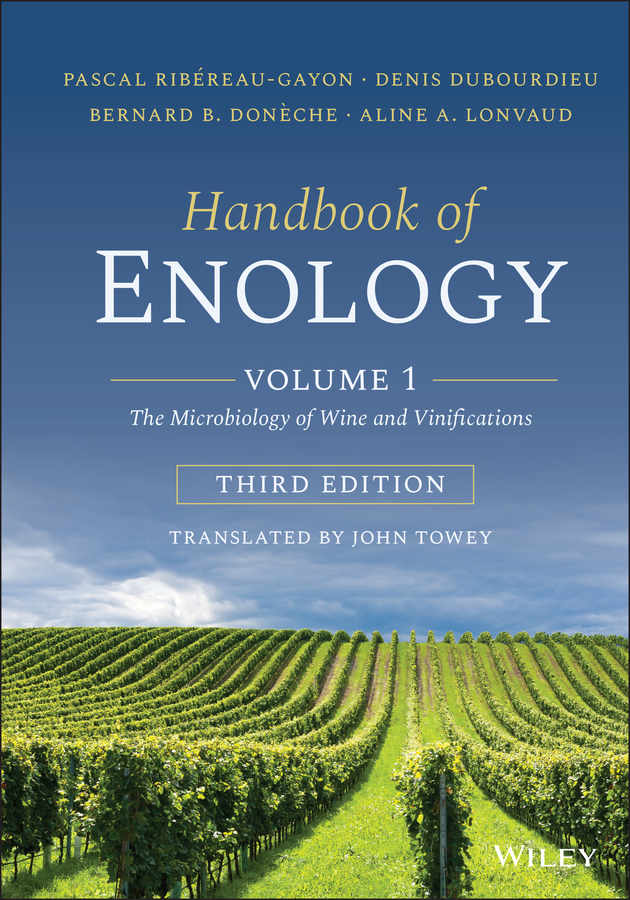
Handbook of Enology, Volume 1 : The Microbiology of Wine and Vinifications
656 p.
As an applied science, enology is a collection of knowledge from the fundamental sciences including chemistry, biochemistry, microbiology, bioengineering, psychophysics, cognitive psychology, etc., and nourished by empirical observations. The approach used in the Handbook of Enology is thus the same. It aims to provide practitioners, winemakers, technicians and enology students with foundational knowledge and the most recent research results. This knowledge can be used to contribute to a better definition of the quality of grapes and wine, a greater understanding of chemical and microbiological parameters, with the aim of ensuring satisfactory fermentations and predicting the evolution of wines, an7thd better mastery of wine stabilization processes. As a result, the purpose of this publication is to guide readers in their thought processes with a view to preserving and optimizing the identity and taste of wine and its aging potential. This third English edition of The Handbook of Enology , is an enhanced
conditions for the development of yeasts; Lactic acid bacteria, their metabolism and their development in wine; Acetic bacteria; The use of sulfur dioxide in the treatment of musts and wines; Products and processes acting in addition to sulfur dioxide; Winemaking; The grape and its maturation; Harvesting and processing of grapes after harvest; Vinification in red and white wine making. The target audience includes advanced viticulture and enology students, professors and researchers, and practicing grape growers and vintners. [Publisher's Text]
1559761 characters.
-
Informationen
ISBN: 9781119584698
THEMENBEREICHE
MwSt ausgenomen
PDF
eBook
eBook
Erlaubte Funktionen anzeigen