2012 - Lexington Books
ID: 6191365
eBook PDF (2,79 Mb)
Nur mit Adobe Acrobat Reader kompatibel - kostenlose Software - (erfahren Sie, wie Sie die Dokumente öffnen)
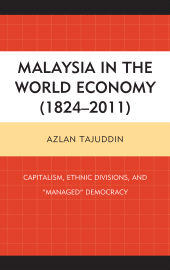
Malaysia in the World Economy (1824-2011) : Capitalism, Ethnic Divisions, and "Managed" Democracy
294 p.
of national stability. As a result, an increasingly unpopular National Front political coalition has remained in power in the country since 1957. Meanwhile, Malaysia's marginal position in the world economy, which has maintained its economic subordination to the developed countries of the west and Japan, has reproduced the internal social inequities inherited from colonial rule and channeled the largest returns of economic growths into the hands of the country's foreign investors as well as local elites associated with the ruling machinery. Over the years however, the state has lost some of its political legitimacy in the face of widening social disparities, increased ethnic polarization, and prevalent corruption. This has been made possible by extensive exposures of these issues via new social media and communications technology. Hence, informational globalization may have begun to empower Malaysians in a new struggle for political reform, thereby reconfiguring the balance of power between the state and
civil society. Unlike other past research, Malaysia in the World Economy combines both macro- and micro-theoretical approaches in critically analyzing the relationship between capitalist development and democratization in Malaysia within a comparative-historical and world-systemic context. [Publisher's text]
-
Informationen
ISBN: 9798216227212
THEMENBEREICHE
MwSt ausgenomen
PDF
eBook
eBook
Erlaubte Funktionen anzeigen